
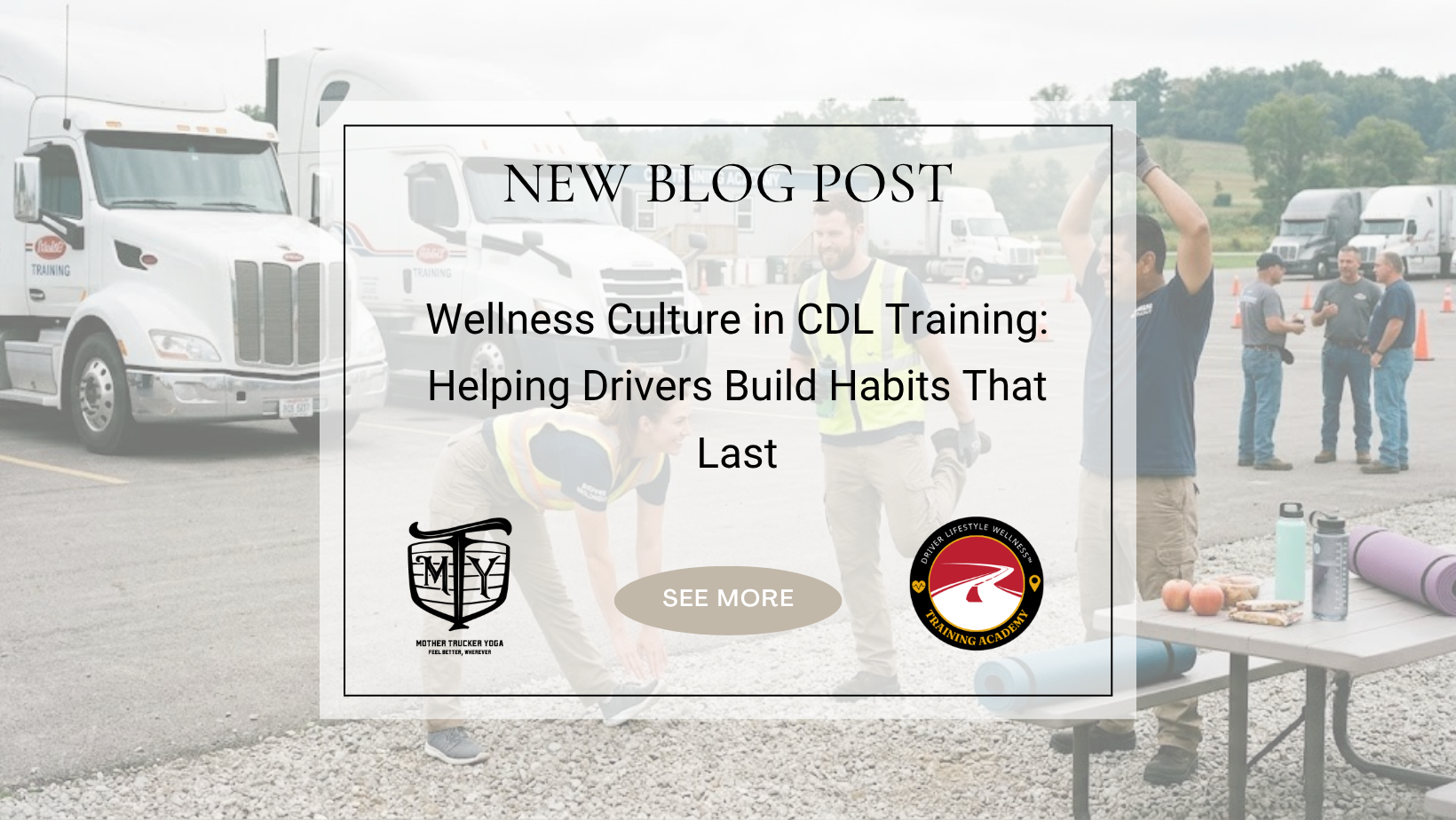
Wellness Culture in CDL Training: Helping Drivers Build Habits That Last
Wellness Culture in CDL Training
The trucking industry has traditionally measured driver success through:
- Compliance
- Safety records
- Driving performance
- Productivity
And while these factors are important, they only tell part of the story.
Because long-term driver success also depends on:
- Physical health
- Mental resilience
- Lifestyle habits
- Recovery and stress management
This is why creating a strong wellness culture in CDL training is becoming one of the most important shifts in driver education today.
Drivers who learn healthy habits early are better prepared to handle the realities of life on the road long after graduation.
Why Wellness Culture Matters
Culture shapes behavior.
When wellness becomes part of everyday training culture, students begin to view healthy habits as a normal and necessary part of professional driving.
Without that culture, wellness often feels optional.
And when drivers enter high-pressure environments without strong wellness habits already established, healthy routines are often the first thing to disappear.
A strong wellness culture helps normalize:
- Hydration
- Movement
- Stress management
- Recovery
- Mental health awareness
These habits directly support long-term career sustainability.
Trucking Requires More Than Technical Skills
Driving safely is essential.
But life on the road also requires drivers to manage:
- Fatigue
- Isolation
- Physical strain
- Irregular schedules
- Emotional stress
Traditional CDL education often focuses heavily on technical instruction while giving limited attention to lifestyle management.
This leaves many new drivers unprepared for the physical and mental realities of trucking.
Creating wellness culture helps close that gap.
Wellness Education Must Feel Practical
Students are more likely to adopt wellness habits when they feel realistic and achievable.
Effective wellness-focused training includes practical strategies such as:
- Stretching during breaks
- Drinking water consistently
- Building better sleep habits
- Managing stress proactively
- Creating simple recovery routines
Drivers need habits that fit naturally into real-world schedules-not unrealistic wellness expectations.
Why New Drivers Lose Healthy Habits Quickly
Many students begin their careers motivated to stay healthy.
But once they transition into full-time driving, wellness routines often become difficult to maintain.
New drivers suddenly face:
- Long shifts
- Tight delivery schedules
- Physical exhaustion
- Inconsistent routines
Without strong foundational habits already established, wellness often gets pushed aside in survival mode.
This is why consistent wellness culture during training matters so much.
Instructors Help Shape Driver Identity
Students often model the behavior they observe.
When instructors prioritize:
- Hydration
- Movement
- Positive stress management
- Recovery habits
students begin to associate wellness with professionalism.
Instructor influence helps shape how future drivers view:
- Self-care
- Long-term health
- Career sustainability
This cultural influence can create long-lasting industry change.
Wellness Culture Supports Better Retention
Driver turnover continues to challenge the trucking industry.
Many drivers leave because of:
- Burnout
- Chronic stress
- Physical discomfort
- Lifestyle exhaustion
When wellness habits are built early, drivers are often better prepared to manage the long-term demands of the profession.
This contributes to:
- Improved job satisfaction
- Better physical resilience
- Stronger career longevity
Healthy drivers are more likely to remain in the industry long-term.
Healthy Drivers Support Safer Roads
Driver wellness and roadway safety are deeply connected.
Drivers struggling with:
- Sleep deprivation
- Chronic stress
- Physical pain
- Fatigue
may experience reduced:
- Focus
- Alertness
- Recovery ability
Wellness-focused training helps drivers understand how their health directly impacts driving performance and safety outcomes.
Wellness Must Continue Beyond Graduation
Creating a wellness culture in CDL training is only the beginning.
Fleets also play a major role in reinforcing healthy habits after drivers enter the workforce.
Drivers are more likely to maintain wellness routines when fleets:
- Encourage movement and recovery
- Support healthy scheduling practices
- Promote wellness resources
- Normalize self-care within company culture
Consistency between schools and employers creates stronger long-term wellness outcomes.
The Industry Is Beginning to Evolve
More schools and fleet leaders are recognizing that driver wellness is not just a personal issue.
It is an industry sustainability issue.
The future of trucking depends on:
- Healthier drivers
- Better retention
- Reduced burnout
- Stronger workforce stability
This is why wellness education and culture are becoming increasingly important across driver training programs.
Wellness Helps Drivers Build Resilience
The trucking lifestyle can be physically and emotionally demanding.
Drivers who develop healthy habits early often build stronger resilience over time.
Wellness culture helps drivers learn how to:
- Recover more effectively
- Manage stress proactively
- Maintain energy levels
- Protect long-term physical health
Resilience supports both personal well-being and professional success.
Why Prevention Matters
Waiting until drivers experience serious burnout or health issues is not sustainable.
Preventive wellness education helps drivers:
- Identify unhealthy patterns early
- Build healthier routines before problems become severe
- Develop habits that support long-term wellness
Small habits practiced consistently often create the greatest long-term impact.
Wellness Should Become Part of Professional Driver Standards
The trucking industry has historically prioritized compliance and operational performance.
But the future requires broader standards that also include:
- Physical wellness
- Mental health awareness
- Lifestyle sustainability
Drivers deserve education that prepares them for real life-not just licensing exams.
Wellness culture helps create stronger, healthier professionals from the very beginning.
Final Thoughts
Building a strong wellness culture in CDL training helps drivers develop habits that support long-term health, resilience, safety, and career sustainability.
When wellness becomes part of driver identity from day one, students are better prepared for the physical and emotional realities of life on the road.
And when healthier habits continue from the classroom into the cab, the entire trucking industry benefits.
You May Also Like
- How CDL Schools Are Leading the Way in Driver Wellness Programs
External Resource: https://www.cdc.gov/transportationsafety
- Fleet Managers and Wellness: 2025 Implementation Trends and Best Practices
External Resource: https://www.fleetowner.com
- Overcoming Barriers: Challenges in Driver Wellness Adoption
External Resource: https://www.nhtsa.gov
- Driver Lifestyle Wellness: Benefits for Safety and Performance
External Resource: https://www.osha.gov