
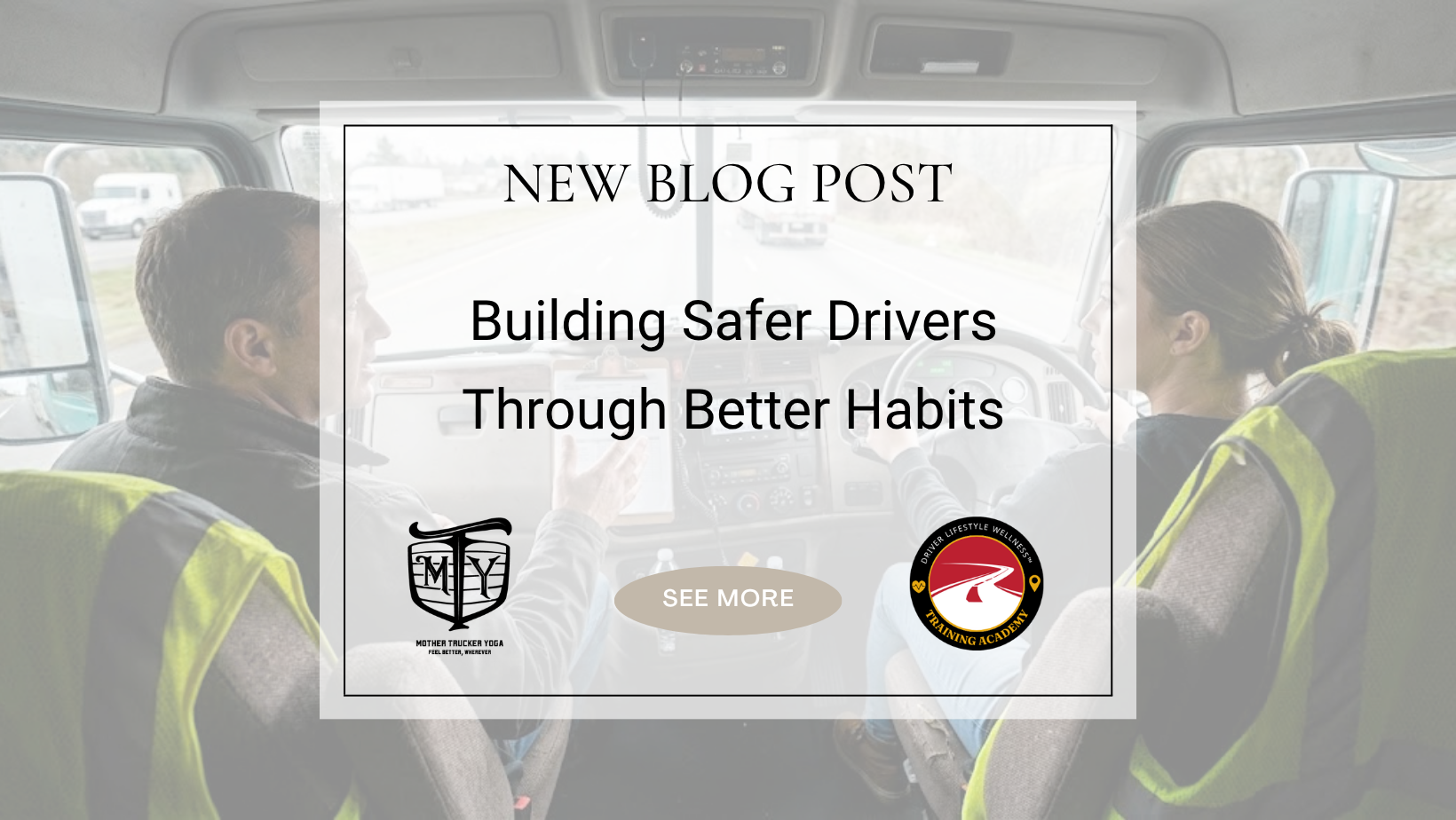
Building Safer Drivers Through Better Habits
Safe Driving Starts With More Than Technical Skills
Becoming a professional driver requires learning a long list of technical skills. Safe driving habits for professional drivers
Drivers need to understand vehicle inspections, traffic laws, defensive driving, maneuvering, backing, trip planning, hours-of-service requirements, and other responsibilities that come with operating a commercial motor vehicle.
But technical knowledge is only part of becoming a safe and successful professional driver.
What happens between those lessons also matters.
Habits matter.
How a driver prepares for a trip, manages distractions, approaches fatigue, checks their vehicle, handles stress, and responds to changing road conditions can all become part of their daily driving routine.
For CDL schools and driver educators, this creates an important opportunity.
Training should not only teach students what to do.
It should also help them develop consistent habits that they can carry into their professional careers.
Why Habits Matter in Professional Driving
A habit is a behavior that becomes more automatic through repetition.
For professional drivers, that can be valuable because trucking involves making decisions repeatedly.
Before a trip, a driver may inspect the vehicle.
During the trip, they monitor traffic, road conditions, mirrors, speed, following distance, and surroundings.
When conditions change, they have to adjust.
The goal is not to make driving mindless.
Instead, good habits can help create consistency around important safety behaviors.
A driver who consistently prepares before leaving may be less likely to overlook an important step.
A driver who routinely checks their surroundings can build stronger situational awareness.
A driver who consistently recognizes signs of fatigue may be more prepared to respond appropriately.
Habits do not eliminate risk.
They create a framework for approaching the job with greater consistency.
Start With the Pre-Trip Routine
One of the clearest examples of a professional driving habit is the pre-trip inspection.
A pre-trip inspection is not simply a test requirement that disappears after CDL school.
It is part of the driver’s ongoing responsibility.
FMCSA’s regulations establish requirements for drivers to inspect their commercial motor vehicles and ensure they are in safe operating condition. Drivers are also required to complete the appropriate inspection reports when applicable.
CDL schools can reinforce this by teaching students to view inspections as part of their professional identity.
The message can be simple:
Do not inspect because someone is watching. Inspect because it is part of doing the job responsibly.
When students understand the purpose behind a procedure, it can become easier to carry that behavior into their careers.
Build a Habit of Looking Ahead
Professional driving requires constant awareness of what is happening around the vehicle.
That means paying attention not only to the vehicle immediately ahead but also to traffic patterns, road conditions, weather, construction, merging traffic, pedestrians, and other potential changes.
Looking ahead gives a driver more time to recognize changing conditions and respond appropriately.
This is especially important because commercial vehicles have different handling characteristics and stopping requirements than passenger vehicles.
A habit of scanning the road environment can become part of defensive driving.
Driver education can reinforce questions such as:
- What is happening several vehicles ahead?
- What could change in the next few seconds?
- Where are the potential conflict points?
- What is happening in the mirrors?
- Has traffic speed changed?
- Are weather or road conditions changing?
These questions encourage drivers to think beyond the immediate moment.
Reduce Distractions Before They Become a Problem
Distracted driving is not limited to texting.
Distractions can include many activities that take a driver’s attention away from operating the vehicle.
A phone notification.
Adjusting a device.
Eating.
Searching for something in the cab.
Looking at a navigation system.
Engaging in an unrelated conversation.
Each situation may seem small.
But safe driving depends on maintaining attention to the driving environment.
That is why creating a habit of setting up the cab before moving can be useful.
Drivers can organize frequently needed items, set navigation appropriately, secure loose objects, and address other distractions before beginning the trip.
The basic principle is:
If it can wait until the vehicle is safely parked, let it wait.
Fatigue Awareness Is a Professional Skill
A driver’s physical and mental condition can affect their ability to operate a vehicle safely.
Fatigue deserves particular attention in commercial transportation.
Long work hours, irregular schedules, insufficient sleep, and other factors can contribute to driver fatigue. NIOSH identifies fatigue as an important occupational safety concern for commercial motor vehicle drivers.
That makes fatigue awareness an important professional habit.
Drivers should understand the importance of adequate sleep and should recognize that fatigue is not something to simply push through.
A wellness-focused driver education program can include information about:
- Sleep
- Rest schedules
- Signs of fatigue
- Shift work
- Long driving periods
- Stress
- Sleep disorders
- Appropriate responses to fatigue
Most importantly, drivers need to understand that safety takes priority when they are too fatigued to drive safely.
Better Habits Include Knowing When to Stop
Professional drivers are often working within deadlines.
That can create pressure to keep moving.
But recognizing when conditions require a pause is part of professional judgment.
A driver may need to stop because of fatigue, severe weather, mechanical concerns, visibility issues, or another safety-related condition.
The ability to recognize those situations is just as important as knowing how to operate the vehicle.
CDL schools can help students understand that making a safety-based decision is not a failure to complete the job.
It is part of professional responsibility.
Wellness Habits Can Support Professional Driving
Driver wellness and driving safety are connected in practical ways.
A driver who regularly ignores sleep, hydration, nutrition, movement, and recovery may find it more difficult to maintain healthy routines during demanding trips.
This does not mean a wellness routine guarantees safer driving.
It means driver education can acknowledge that professional performance takes place within a human body.
Basic habits can include:
- Getting adequate sleep
- Staying appropriately hydrated
- Eating balanced meals when possible
- Taking appropriate movement breaks
- Managing stress
- Paying attention to persistent health concerns
- Seeking appropriate healthcare when needed
These habits should complement, not replace, formal safety training and regulatory requirements.
Movement Can Be Part of a Driver’s Routine
Long periods of sitting are a reality for many professional drivers.
That makes movement another useful habit to discuss during driver education.
Movement does not have to mean a lengthy workout.
A driver might walk during an appropriate break or perform simple mobility exercises while safely parked.
The purpose is to create opportunities to move throughout the workday.
For CDL schools, the lesson can be simple:
A break is an opportunity to reset the body and mind, not simply time away from the steering wheel.
Of course, no movement or exercise should be performed while driving or while the vehicle is not safely parked.
Habits Around Vehicle Care Matter Too
Professional driving habits extend beyond personal wellness.
Vehicle care is another area where consistency matters.
Drivers should understand the importance of:
- Pre-trip inspections
- Post-trip inspections when required
- Reporting vehicle defects
- Monitoring vehicle condition
- Following maintenance procedures
- Securing cargo appropriately
- Checking equipment as required
A driver who notices a potential problem should follow the appropriate company and regulatory procedures rather than assuming that a small issue will resolve itself.
Good habits help create a culture where safety is part of the routine.
Communication Is a Safety Habit
Professional drivers do not operate in isolation.
They communicate with dispatchers, fleet managers, maintenance teams, customers, safety personnel, other drivers, and sometimes emergency services.
Clear communication can help prevent misunderstandings.
Drivers should know how and when to communicate:
- Mechanical concerns
- Route issues
- Delays
- Weather-related concerns
- Safety concerns
- Fatigue-related concerns
- Changes that may affect delivery or scheduling
Fleets can support this by creating clear communication procedures.
Drivers should know who to contact and what information is expected.
Teach the “Why,” Not Just the “What”
One of the most effective ways to build lasting habits is to explain why the behavior matters.
Instead of telling students:
“Do your inspection because it is required.”
Explain how inspections can help identify vehicle issues before they become more serious problems.
Instead of simply saying:
“Do not use your phone while driving.”
Explain that distractions can take attention away from the driving environment.
Instead of saying:
“Get enough sleep.”
Explain how inadequate sleep can contribute to fatigue and affect alertness.
Understanding the reason behind a rule can help students connect the lesson to real-world driving.
Habits Are Built Through Repetition
A single training session is unlikely to create a lasting habit.
Habits develop through repetition.
That means CDL schools can reinforce important behaviors throughout training rather than introducing them once and moving on.
For example:
During vehicle training: Reinforce inspection routines.
During road training: Reinforce scanning and situational awareness.
During safety discussions: Reinforce distraction management.
During wellness education: Reinforce sleep and fatigue awareness.
During career preparation: Reinforce professional communication and decision-making.
The more consistently these concepts appear, the more familiar they become.
Fleet Managers Can Continue the Education
The transition from CDL school to professional employment is an important period.
A driver may leave training with foundational knowledge but encounter very different circumstances once they begin working.
Fleet managers can continue reinforcing good habits through:
- New-driver orientation
- Safety meetings
- Refresher training
- Coaching
- Driver feedback
- Wellness education
- Incident reviews
- Recognition of positive safety behaviors
The goal should be ongoing development rather than assuming that training ends when a driver receives their CDL.
Avoid Creating a Culture of “Just Get It Done”
Transportation is a business.
Deliveries have schedules.
Customers have expectations.
Routes have deadlines.
But a strong safety culture needs to recognize that operational pressure can influence driver decision-making.
If drivers believe that completing a delivery is always more important than raising a safety concern, they may feel pressure to make decisions they would otherwise avoid.
Companies can reinforce a different message:
Professional drivers are expected to make responsible safety decisions.
That includes communicating concerns when something is wrong.
Regulators, Educators, and Fleets Share the Goal of Professional Development
Different organizations have different responsibilities within transportation.
Regulators establish and enforce requirements.
CDL schools provide foundational education.
Driver educators teach practical skills.
Fleets provide ongoing training and operational support.
Healthcare and wellness professionals can contribute education related to driver health.
Driver advocates can help bring driver experiences into the conversation.
No single organization needs to handle every part of driver development.
The opportunity is to make sure the pieces work together.
Building Safer Drivers Is an Ongoing Process
There is no single habit that makes a driver safe.
Professional driving involves constantly changing conditions, decisions, responsibilities, and risks.
That is why driver development should continue throughout a career.
A driver can continue improving:
- Situational awareness
- Vehicle knowledge
- Decision-making
- Fatigue awareness
- Communication
- Vehicle inspection habits
- Distraction management
- Health and wellness routines
- Knowledge of regulations
- Professional judgment
The goal is continuous improvement rather than perfection.
Better Habits Build Professional Drivers
Safety begins with knowledge, but professional driving requires more than knowing the rules.
Drivers need routines that help them apply what they have learned consistently.
That is where habits become important.
A thorough pre-trip inspection.
A consistent approach to managing distractions.
Regular attention to fatigue.
Appropriate movement and recovery.
Clear communication.
A willingness to stop when conditions require it.
A commitment to vehicle care.
These behaviors may seem simple individually.
Together, they can become part of a professional driver’s approach to the job.
For CDL schools, the opportunity is to begin building those habits before a student ever starts their first professional route.
For fleets, the opportunity is to keep reinforcing them long after orientation.
For driver educators and industry leaders, the message is equally important:
Safe driving is not just something a driver learns. It is something a driver practices every day.
You May Also Like
How CDL Schools Can Teach Wellness to Prevent Burnout
Discover why CDL schools are more than training grounds for truck drivers and how wellness education can help students prepare for the realities of life on the road.
Can Lifestyle Training Reduce New Driver Attrition Rates?
Learn how lifestyle training can support long-term driver health and help new drivers better understand the demands of a career in transportation.
External Resource: National Institute for Occupational Safety & Health – Trucker Mental Health Insights
Explore research on the mental health experiences and challenges of truck drivers.
https://pmc.ncbi.nlm.nih.gov/articles/PMC11959723
https://driverlifestylewellnessacademy.com/