
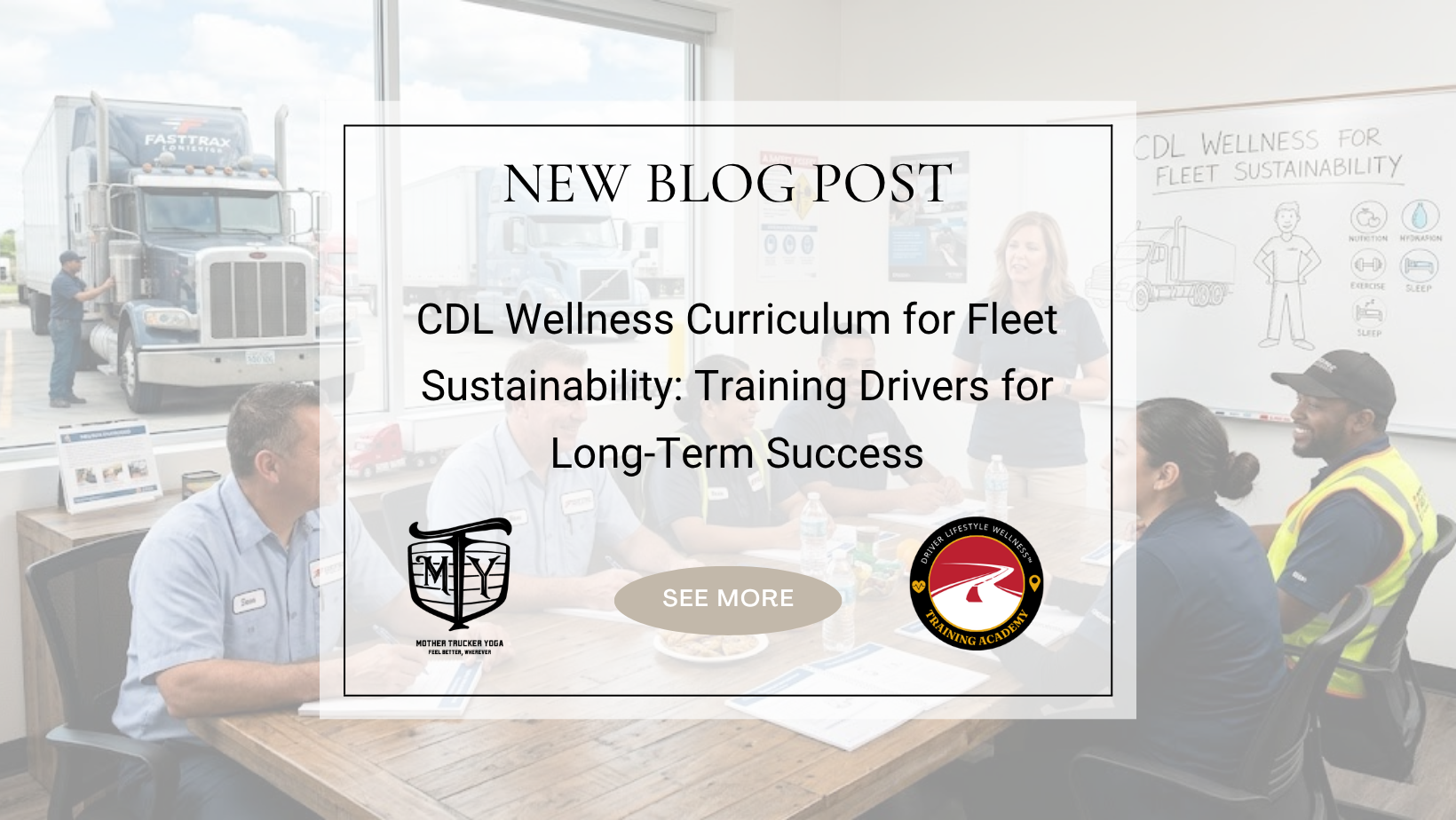
CDL Wellness Curriculum for Fleet Sustainability: Training Drivers for Long-Term Success
The trucking industry is facing a sustainability challenge-and it’s not just about fuel, equipment, or logistics.
It’s about people.
Drivers are entering the industry, but many are not staying.
Turnover remains high.
Burnout is common.
Health issues are increasing.
And one of the biggest gaps contributing to this problem starts at the very beginning:
Driver training.
This is where a CDL wellness curriculum for fleet sustainability becomes essential.
Because if we want drivers to succeed long-term, we must train them for more than just passing a test.
We must train them for life on the road.
The Missing Piece in CDL Training
Traditional CDL programs are designed to produce safe, compliant drivers.
They focus on:
- Vehicle operation
- Road safety
- Regulations and compliance
While these are critical, they leave out a major component:
Lifestyle readiness.
New drivers are often unprepared for:
- Long hours of sitting
- Limited access to healthy food
- Irregular sleep schedules
- Physical strain
- Mental and emotional stress
Without preparation, these challenges quickly lead to burnout.
Why Wellness Education Must Start Early
By the time drivers experience burnout, it is often too late.
Retention strategies at the fleet level can help-but prevention starts earlier.
A CDL wellness curriculum for fleet sustainability introduces drivers to:
- Healthy habits before bad ones form
- Practical strategies for managing life on the road
- Tools for maintaining physical and mental health
This early foundation changes the trajectory of a driver’s career.
What a CDL Wellness Curriculum Includes
A strong wellness curriculum is not theoretical-it is practical, actionable, and tailored to the trucking lifestyle.
Key components include:
1. Movement and Mobility Training
Drivers need to understand how to care for their bodies in a sedentary job.
This includes:
- Stretching routines for tight muscles
- Simple exercises that can be done near the truck
- Posture awareness during long drives
These practices help prevent injuries and chronic pain.
2. Nutrition Education for the Road
Healthy eating looks different for drivers.
A wellness curriculum teaches:
- How to make better choices at truck stops
- How to plan meals on the road
- How to manage energy through nutrition
This reduces reliance on processed foods and supports overall health.
3. Sleep and Recovery Strategies
Sleep is one of the biggest challenges in trucking.
Drivers must learn:
- How to improve sleep quality in a sleeper cab
- How to manage irregular schedules
- How to create recovery routines
Better sleep leads to better performance and safety.
4. Stress Management and Mental Health Awareness
Mental health is often overlooked-but it is critical for long-term success.
A wellness curriculum includes:
- Stress reduction techniques
- Emotional awareness
- Strategies for managing isolation
This builds resilience and prevents burnout.
5. Habit Formation and Consistency
Wellness is not about one-time actions-it’s about daily habits.
Drivers learn how to:
- Build simple routines
- Stay consistent even with changing schedules
- Create sustainable lifestyle patterns
This is what drives long-term results.
How Wellness Curriculum Supports Fleet Sustainability
When drivers are trained in wellness from the beginning, fleets benefit in multiple ways.
A CDL wellness curriculum for fleet sustainability leads to:
- Lower turnover rates
- Reduced healthcare costs
- Improved safety performance
- Higher driver satisfaction
- Longer driver careers
This creates a more stable and reliable workforce.
The Role of CDL Schools in Industry Change
CDL schools are the starting point for every driver’s journey.
They have the opportunity to:
- Shape habits early
- Set expectations for lifestyle management
- Prepare drivers for real-world conditions
By integrating wellness into training, schools become a key part of the solution to industry-wide retention challenges.
Why Fleets Should Partner with Training Programs
Fleets cannot solve retention alone.
They must work with CDL schools to ensure drivers are prepared before they are hired.
Partnership opportunities include:
- Aligning training with real-world demands
- Supporting wellness education initiatives
- Providing ongoing education after onboarding
This creates a seamless transition from training to employment.
The Long-Term Impact on Drivers
Drivers who receive wellness education early are more likely to:
- Stay in the industry longer
- Maintain better physical health
- Manage stress effectively
- Perform consistently
This benefits not only fleets-but the drivers themselves.
From Compliance to Career Sustainability
The trucking industry has long focused on compliance.
But the future requires a shift toward career sustainability.
A CDL wellness curriculum bridges that gap by:
- Preparing drivers for long-term success
- Supporting their health and well-being
- Creating a more resilient workforce
This is how the industry evolves.
The Future of Driver Training
The next generation of drivers will expect more from training programs.
They will look for:
- Education that prepares them for real life-not just exams
- Support systems that extend beyond the classroom
- Employers who prioritize their health
CDL schools that adopt wellness curriculum will lead this transformation.
Final Thoughts
The trucking industry cannot build a sustainable future without addressing driver health at its foundation.
A CDL wellness curriculum for fleet sustainability is not an add-on-it is a necessity.
When drivers are trained to care for their bodies and minds from day one, they are better equipped to handle the demands of the job.
And when drivers are prepared, they stay.
That’s how we build the future of trucking-one healthy driver at a time.
You May Also Like
How CDL Schools Can Teach Wellness to Prevent Burnout – Discover why The Role of CDL Schools in Preventing Burnout CDL schools are more than just training grounds for truck drivers
Link: https://driverlifestylewellnessacademy.com/cdl-schools-driver-wellness-prevent-burnout/
Can Lifestyle Training Reduce New Driver Attrition Rates? – Learn how lifestyle training supports long-term driver health.
Link: https://driverlifestylewellnessacademy.com/lifestyle-training-lowers-driver-attrition/
External Resource: National Institute for Occupational Safety & Health – Trucker Mental Health Insights