
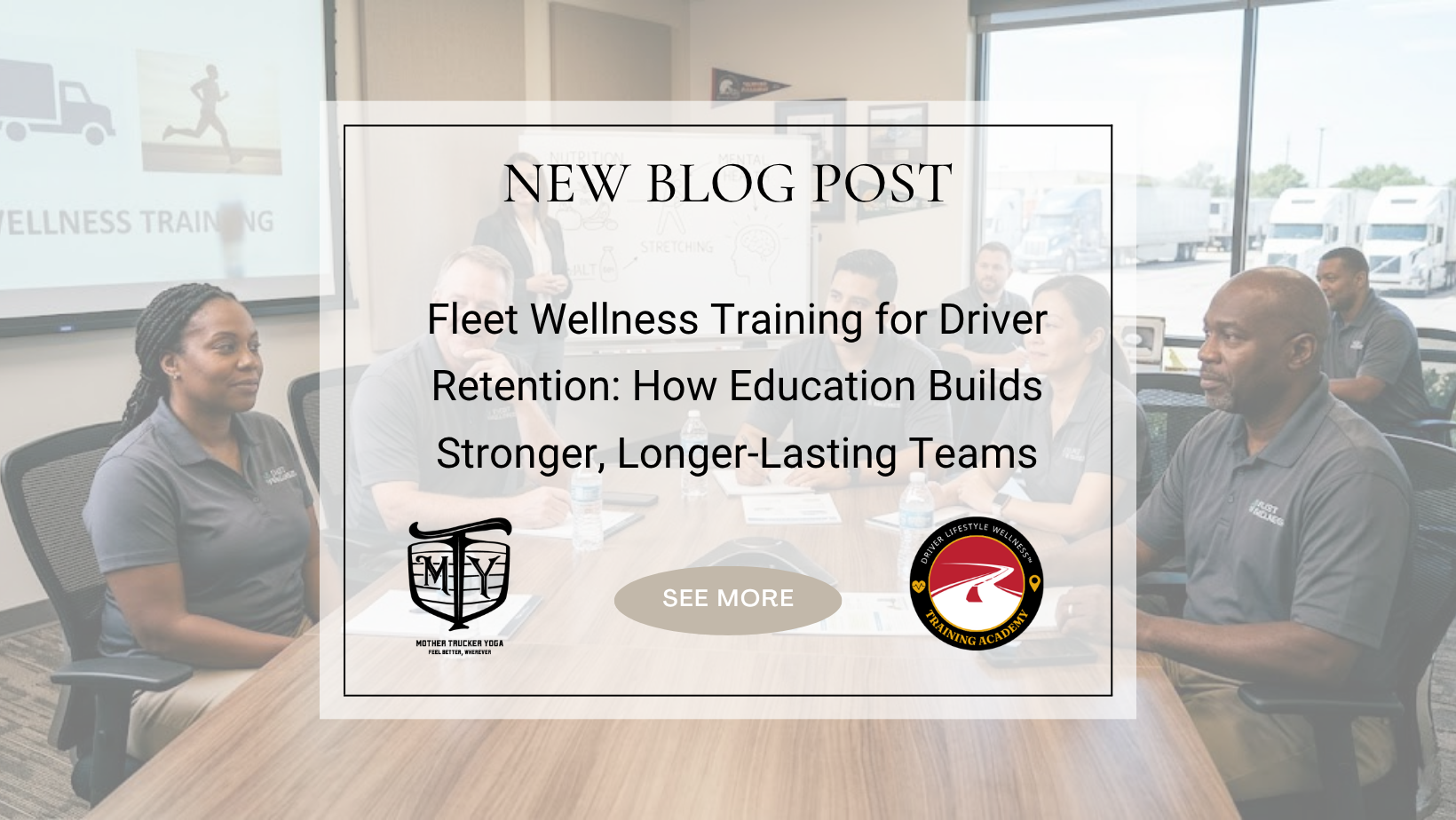
Fleet Wellness Training for Driver Retention: How Education Builds Stronger, Longer-Lasting Teams
The trucking industry has spent years trying to solve driver retention with operational fixes.
Higher pay.
Signing bonuses.
Adjusted routes.
And while these strategies can attract drivers, they often fail to keep them.
Because retention is not just about compensation-it’s about capacity.
Can a driver physically and mentally sustain this job long-term?
That’s the real question.
And the answer lies in something many fleets still overlook:
Education.
More specifically, fleet wellness training for driver retention.
Why Training Is the Missing Link in Retention
Most fleets invest heavily in compliance training.
Drivers learn:
- Safety protocols
- Regulations
- Equipment handling
But very few are trained in:
- How to take care of their bodies
- How to manage stress
- How to maintain energy on the road
- How to prevent burnout
This gap creates a workforce that is technically skilled-but physically and mentally unprepared for long-term success.
That’s where wellness training changes everything.
What Is Fleet Wellness Training?
Fleet wellness training is a structured educational system that teaches drivers how to maintain their health within the realities of the job.
It includes:
- Movement and mobility education
- Nutrition strategies for the road
- Sleep and recovery techniques
- Stress management tools
- Daily habit-building practices
This is not about adding more to a driver’s plate.
It’s about giving them tools to sustain their career.
The Link Between Wellness Training and Retention
Drivers don’t leave because they don’t know how to drive.
They leave because:
- Their bodies break down
- Fatigue becomes overwhelming
- Stress accumulates
- Health issues become unmanageable
Fleet wellness training for driver retention directly addresses these issues.
When drivers are equipped with the right knowledge and tools:
- They experience less physical strain
- They manage stress more effectively
- They recover faster between shifts
- They feel more in control of their health
And when drivers feel better, they stay longer.
Why Traditional Wellness Programs Fall Short
Many fleets have tried wellness programs-but participation is often low.
Why?
Because those programs are:
- Too generic
- Not designed for drivers
- Difficult to implement on the road
- Not integrated into training
Drivers don’t need more information-they need relevant education that fits their environment.
Fleet wellness training succeeds because it:
- Is practical
- Is repeatable
- Is integrated into daily routines
Key Components of Effective Wellness Training
For wellness training to impact retention, it must include the following:
1. Real-World Application
Drivers need strategies they can use immediately.
Examples include:
- Stretching routines at fuel stops
- Simple meal upgrades at truck stops
- Breathing techniques during traffic delays
If it’s not usable on the road, it won’t be used.
2. Short, Consistent Learning Modules
Long training sessions don’t work for drivers.
Instead, effective programs use:
- Short lessons
- Repeatable habits
- Ongoing reinforcement
Consistency creates lasting change.
3. Integration Into Onboarding and Ongoing Training
Wellness should not be optional.
It should be part of:
- CDL training
- New driver onboarding
- Ongoing education programs
This ensures every driver receives the same foundation.
4. Leadership Support and Culture Alignment
Training only works when leadership supports it.
Fleet leaders must:
- Prioritize wellness
- Encourage participation
- Model the importance of health
When wellness becomes part of the company culture, engagement increases.
The ROI of Wellness Training
Investing in fleet wellness training for driver retention delivers measurable results:
- Lower turnover rates
- Reduced healthcare costs
- Improved driver performance
- Fewer safety incidents
- Higher job satisfaction
Training is not an expense-it’s a long-term investment in workforce stability.
The Role of CDL Schools in Supporting Fleet Wellness
Wellness training doesn’t have to start after hiring.
CDL schools can:
- Introduce lifestyle education early
- Prepare drivers for real-world challenges
- Build habits before bad patterns develop
When fleets partner with training institutions, the impact is even greater.
Drivers enter the workforce already equipped with the tools they need.
Why Drivers Value Wellness Training
Drivers want to succeed.
They want to:
- Feel better physically
- Stay alert and focused
- Build long-term careers
- Avoid burnout
When fleets provide wellness training, drivers feel:
- Supported
- Valued
- Prepared
This emotional connection strengthens loyalty-and retention.
From Short-Term Fixes to Long-Term Solutions
Retention is not solved with quick fixes.
It requires a long-term strategy.
Wellness training provides that strategy by:
- Addressing root causes of turnover
- Supporting daily health habits
- Creating sustainable career paths
This is how fleets move from reactive hiring cycles to stable, long-term teams.
The Future of Fleet Management
The most successful fleets of the future will not just manage logistics.
They will manage people.
They will understand that:
- Health drives performance
- Performance drives retention
- Retention drives profitability
Fleet wellness training is a critical part of that future.
Final Thoughts
Drivers are the backbone of the trucking industry-but they cannot perform at their best without support.
Fleet wellness training for driver retention provides the tools drivers need to stay healthy, focused, and committed for the long haul.
Because when drivers are educated, they are empowered.
And when they are empowered, they stay.
You May Also Like
How CDL Schools Can Teach Wellness to Prevent Burnout – Discover why The Role of CDL Schools in Preventing Burnout CDL schools are more than just training grounds for truck drivers
Link: https://driverlifestylewellnessacademy.com/cdl-schools-driver-wellness-prevent-burnout/
Can Lifestyle Training Reduce New Driver Attrition Rates? – Learn how lifestyle training supports long-term driver health.
Link: https://driverlifestylewellnessacademy.com/lifestyle-training-lowers-driver-attrition/
External Resource: National Institute for Occupational Safety & Health – Trucker Mental Health Insights